🛡️ AI-Powered Compliance, Built Into Every Payroll Run
NGWorkforce’s AI Compliance Engine continuously audits your workforce data against federal and state labor laws — catching violations before they become fines, lawsuits, or audit flags.
The Problem Every Employer Faces
Labor law compliance isn’t optional — and it’s getting more complex every year. FLSA overtime rules, state meal-break requirements, Davis-Bacon prevailing wages, I-9 eligibility deadlines, and 50 different sets of state wage laws create a compliance minefield. Manual audits are slow, error-prone, and always one payroll cycle behind. The average FLSA violation costs $1,000–$10,000 per employee per year — and most violations go undetected until an audit.
Real-Time Violation Detection
Our engine analyzes every time record as it’s submitted — flagging missed meal breaks, unapproved overtime, and punch irregularities instantly, not days later when payroll has already run.
Rule-Based Audit Engine
Configure compliance rules that mirror your exact obligations — federal FLSA standards, California daily overtime, Illinois break laws, and more. Standard rules are built in; custom rules are a few clicks away.
Payroll Integration Gate
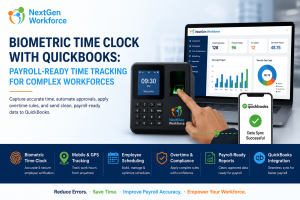
Before data flows to ADP, QuickBooks, Paychex, or Gusto, our engine runs a final compliance scan. Only clean, validated records reach payroll — no surprises, no clawbacks.
Audit-Ready Reports
Every compliance run generates a detailed findings report: which employees were flagged, which rules triggered, and what the violation looked like — exportable as PDF or CSV, ready for your legal or HR team.
AI-Driven Pattern Recognition
Beyond rule checks, our LLM layer identifies anomalies that rigid rules miss — suspicious punch patterns, potential misclassification signals, and scheduling practices that create legal exposure.
Multi-Jurisdiction Support
Operating across states? Our engine applies the right rules to the right employees automatically — no manual configuration per location. Federal floor, state ceiling, local ordinance: all handled.
How the AI Compliance Engine Works
Four steps from raw workforce data to a clean, compliant payroll run.
Connect Your Data
Link your time-tracking, scheduling, and payroll data sources. We support MySQL, REST APIs, SFTP feeds, and direct integrations with ADP, QuickBooks, Paychex, and more.
Configure Your Rules
Select from our library of 50+ pre-built federal and state compliance rules, or create custom rules for your industry, union agreements, or internal policies.
Auto-Audit Every Record
The AI engine extracts, transforms, and evaluates every time entry, punch record, and schedule against your configured rules — fully automated, no manual review required.
Review & Act on Findings
Violations surface in a clear dashboard with employee-level detail, violation type, and remediation guidance. Resolve issues before payroll runs or export findings for HR review.
Compliance Coverage: Federal & All 50 States
Our rule library covers the labor laws that matter most — and we add new rules as regulations change. Here’s what’s covered out of the box:
FLSA Overtime (Federal)
Automatic detection of employees working over 40 hours/week without 1.5× pay. Flags exempt vs. non-exempt misclassification risks and salary threshold violations.
State Meal & Rest Break Laws
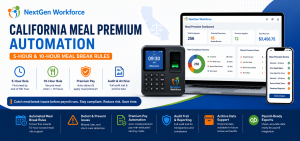
California’s 30-minute meal break for 5+ hour shifts, Illinois’ 20-minute break for 7.5-hour shifts, New York, Washington, and more — all enforced automatically per employee location.
California Daily Overtime
Daily overtime triggers at 8 hours (1.5×) and 12 hours (2×), plus seventh-day rules. Our engine applies California rules to California employees and FLSA rules to everyone else.
Davis-Bacon & Prevailing Wage
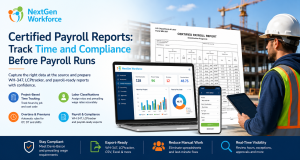
Certified payroll compliance for federally funded construction projects. Validates prevailing wage rates, fringe benefits, and generates Form WH-347 ready data for submission.
I-9 Employment Eligibility
Tracks I-9 completion deadlines (Section 2 within 3 business days), flags expired work authorizations, and surfaces employees approaching re-verification dates.
State Minimum Wage Floors
Maintains a live table of minimum wage rates by state and locality. Automatically cross-checks effective pay rates against current minimums, including scheduled annual increases.
Worker Misclassification
Identifies patterns that suggest 1099 contractors are being treated as employees — consistent schedules, equipment provision, single-client dependency — and flags them for legal review.
Custom Organization Rules
Add your own rules: union contract provisions, industry-specific requirements, internal policies. Write them in plain language — our AI interprets and enforces them automatically.
Stop Discovering Compliance Issues at Audit Time
Let our AI Compliance Engine catch violations before they cost you. Set up in minutes, runs automatically on every payroll cycle.

The NGW Workforce team writes about HR tech, time tracking, scheduling, and workforce compliance.