AI Employee Scheduling Software
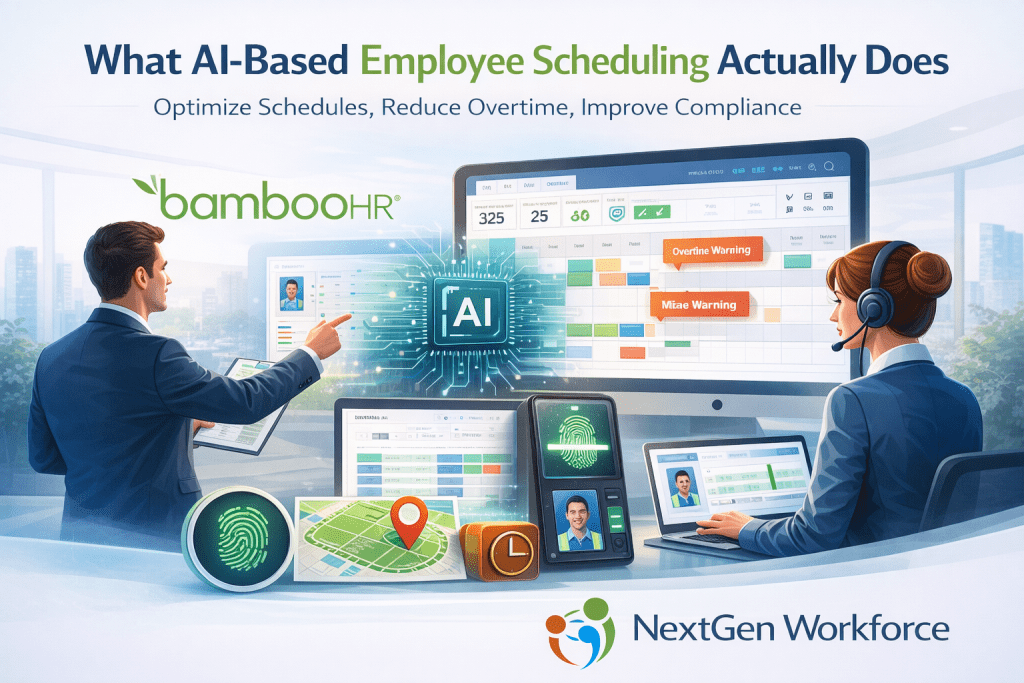
AI-based employee scheduling uses artificial intelligence to analyze workforce data and automatically generate optimized work schedules. It considers employee availability, labor laws, overtime thresholds, skill requirements, and business demand to create efficient schedules. AI scheduling helps organizations reduce overtime costs, prevent compliance violations, and improve workforce productivity. Platforms like NextGen Workforce combine AI scheduling with biometric time tracking, geofencing, and automated compliance monitoring to provide real-time workforce management. Why Traditional Scheduling Methods Fall Short Many organizations still rely on: spreadsheets basic scheduling software manual shift adjustments manager intuition While these methods work for small teams, they quickly become inefficient as workforce complexity grows. Managers often face challenges such as: uneven shift distribution overtime stacking last-minute coverage issues skill mismatches compliance violations These problems lead to higher labor costs, operational inefficiencies, and administrative stress. AI scheduling addresses these issues by using workforce data to guide scheduling decisions. What AI-Based Employee Scheduling Actually Does AI scheduling systems analyze workforce data continuously and help managers make smarter scheduling decisions. Instead of simply assigning shifts, the system evaluates multiple factors simultaneously, including: employee availability skill requirements overtime thresholds labor compliance rules shift coverage needs historical workforce patterns The result is a schedule optimized for efficiency, compliance, and fairness. This allows organizations to move from reactive scheduling to predictive workforce management. AI employee scheduling is a workforce management approach that uses artificial intelligence to automatically generate optimized work schedules. Instead of relying on manual planning, AI scheduling systems analyze employee availability, skills, compliance rules, overtime limits, and historical workforce data to create efficient schedules. This helps organizations reduce labor costs, improve compliance, and ensure the right employees are assigned to the right shifts. Intelligent Shift Optimization One of the most powerful features of AI scheduling is shift optimization. AI systems analyze operational demand and workforce capacity to recommend the best possible shift distribution. This helps organizations: avoid overstaffing prevent understaffing balance employee workloads reduce unnecessary overtime Managers can generate schedules faster while maintaining full operational coverage. Overtime Risk Detection Overtime costs can quickly escalate when schedules are created manually. AI scheduling tools monitor employee hours in real time and flag potential overtime risks before they occur. The system can detect patterns such as: employees approaching overtime thresholds inefficient shift overlaps extended shift durations Managers can then adjust schedules before the payroll impact occurs. This proactive approach helps control labor costs. Compliance Monitoring Labor compliance is becoming more complex across regions and industries. Scheduling systems must consider rules such as: overtime regulations meal break requirements rest period laws shift length limitations AI scheduling engines can apply these compliance rules automatically when generating schedules. This reduces the risk of violations and helps organizations maintain audit-ready workforce records. Workforce Demand Forecasting AI scheduling tools also use historical workforce data to predict future staffing needs. By analyzing past trends such as seasonal demand, attendance patterns, and shift coverage requirements, the system can forecast staffing levels. This allows organizations to: plan schedules more accurately reduce last-minute shift changes improve workforce stability Predictive planning helps managers stay ahead of operational demand. Integrating Scheduling With Attendance Data Scheduling becomes even more powerful when connected to real-time attendance tracking. NextGen Workforce integrates AI scheduling with biometric time clocks, geofencing, and real-time workforce monitoring. This integration ensures: scheduled shifts match actual worked hours attendance data is validated at clock-in overtime risks are detected early workforce visibility improves across locations Managers gain a complete view of workforce activity and scheduling performance. Benefits of AI-Based Employee Scheduling Organizations that adopt AI scheduling often see improvements in several areas: Reduced labor costsOptimized scheduling helps prevent unnecessary overtime and inefficient staffing. Improved complianceAutomated rule enforcement reduces the risk of labor law violations. Faster schedule creationManagers can generate optimized schedules in minutes instead of hours. Better employee satisfactionFair scheduling and predictable shifts improve workforce morale. Increased operational visibilityReal-time workforce insights help leaders make informed decisions. How NextGen Workforce Uses AI Scheduling NextGen Workforce provides AI-based employee scheduling designed for organizations managing complex workforce operations. The platform combines: AI scheduling optimization biometric time clocks geofencing attendance verification real-time workforce tracking automated compliance monitoring intelligent timesheet review This integrated approach allows businesses to manage scheduling, attendance, and compliance in one system. Final Thoughts Employee scheduling is no longer just an administrative task. It is a critical operational function that affects labor cost, workforce productivity, and regulatory compliance. AI-based employee scheduling enables organizations to create smarter schedules, reduce manual effort, and manage workforce complexity more effectively. Businesses that adopt intelligent scheduling tools gain a significant advantage in operational efficiency and workforce management.