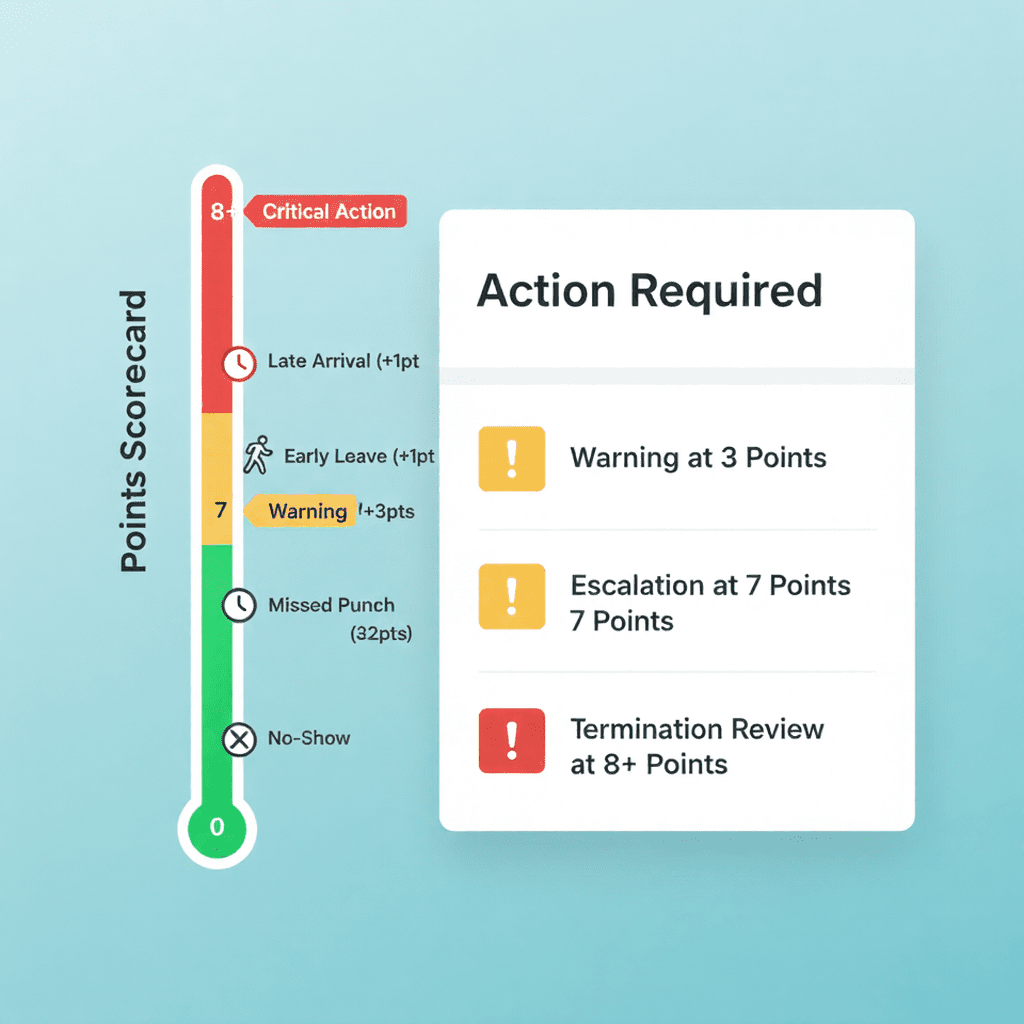
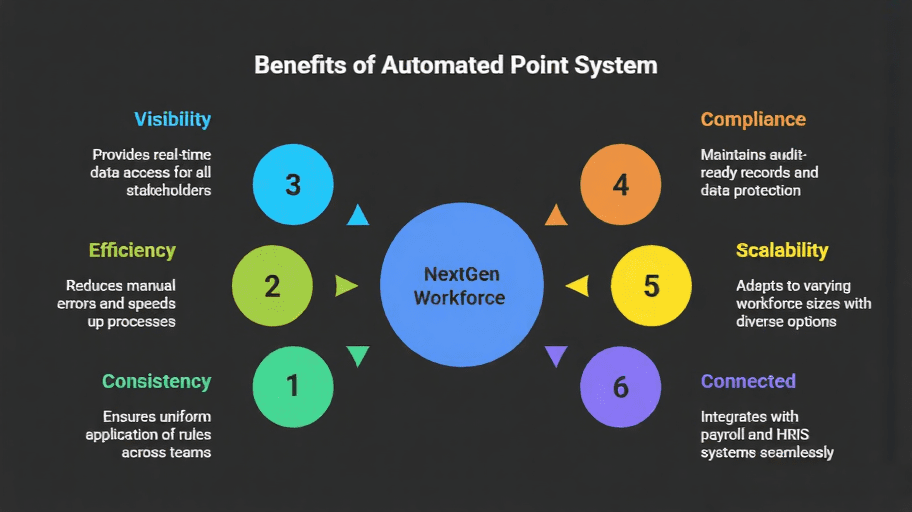
An attendance point system is a straightforward, rules-based method to manage attendance by assigning points to events, such as late arrivals, early departures, missed punches, or no-call/no-shows. When an employee hits certain thresholds, the company takes predetermined actions, such as giving a verbal warning, a written warning, a performance plan, suspension, or starting a termination review.
Think of it as a scorecard for attendance: both employees and managers know the rules, the points, and the consequences. This transparency increases fairness, lowers disputes, and helps HR apply policies consistently across locations, departments, and shifts.
Common Events and Typical Point Values (example)
Late arrival (beyond grace period): 0.5–1 point
Early departure (unauthorized): 0.5–1 point
Missed punch (not corrected in time): 0.5–1 point
No-call/no-show: 2–3 points
Late return from break: 0.25–0.5 point
Partial day absence (unapproved): 0.5–1 point
Approved leave (PTO, sick with documentation, holiday): 0 points
Shift swap (approved): 0 points
Your actual values should reflect your industry, union agreements (if any), local laws, and culture. The goal is consistency, not punishment.
Thresholds & Progressive Actions (example)
3 points: verbal or written warning
7 points: final warning and performance plan
8 points: suspension or termination review
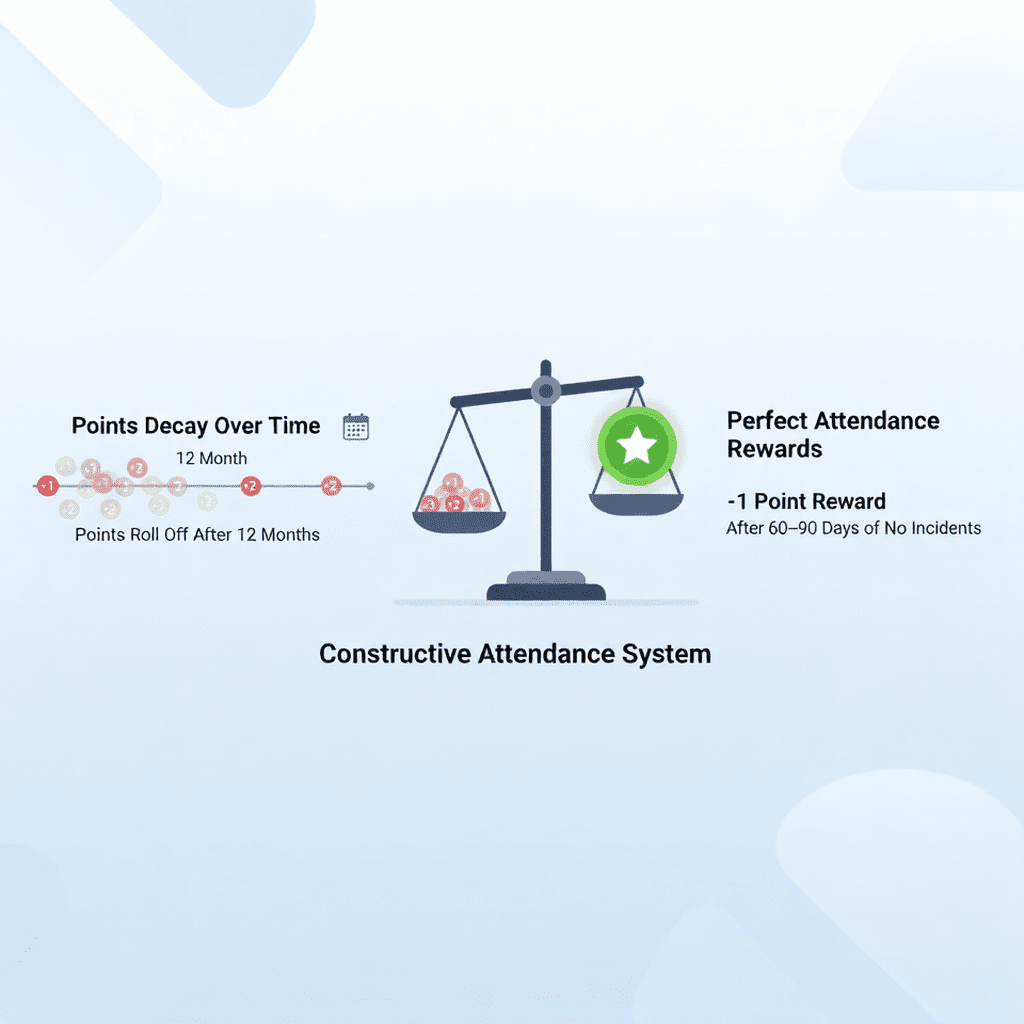
Point “Decay” & Rewards
To maintain a constructive approach, many employers allow points to expire (or “roll off”) after a set period, like 12 months from the event. You can also reward perfect attendance; for example, deduct 1 point after 60 or 90 days without incidents. This promotes improvement instead of locking employees into past mistakes.
How Is a Point System Used in Time Tracking?
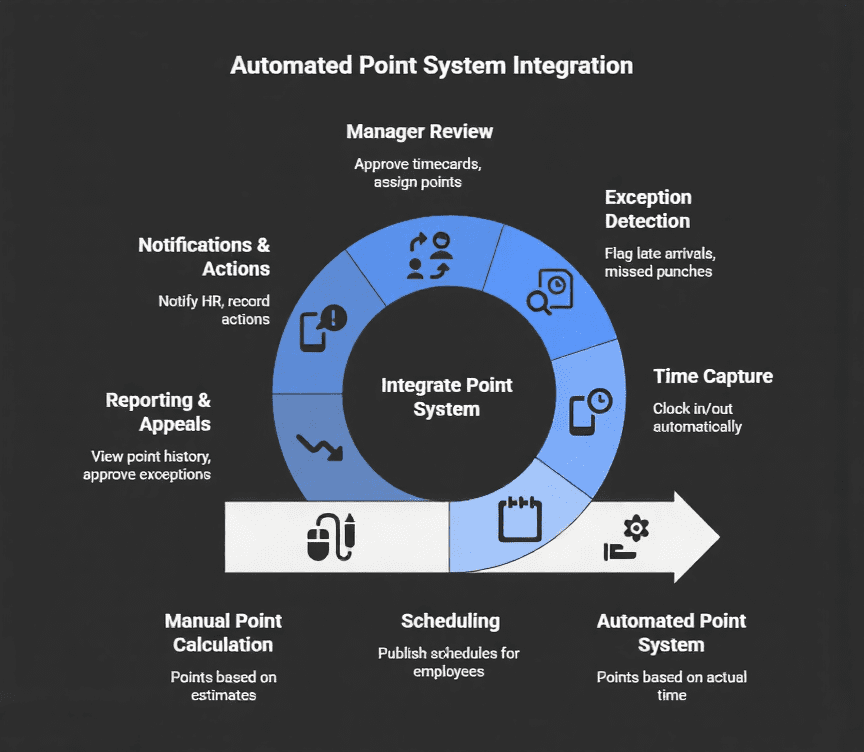
A point system works best when it’s part of your time tracking and scheduling processes, ensuring points are based on actual, approved time data, not manual estimates.
Where It Fits in Your Workflow
Scheduling: You publish schedules. Employees see their assignments and can request time off or swap shifts if needed.
Time Capture: Employees clock in/out using mobile devices, the web, kiosks, or biometrics. Grace periods and rounding rules prevent minor variations from unfairly triggering points.
Exception Detection: The system flags late arrivals, missed punches, early departures, and no-shows based on the schedule.
Manager Review: Supervisors review and approve timecards. Points are assigned upon approval, not on draft data.
Notifications & Actions: When thresholds are met, HR and managers receive notifications. The platform records the action taken, such as coaching or warnings.
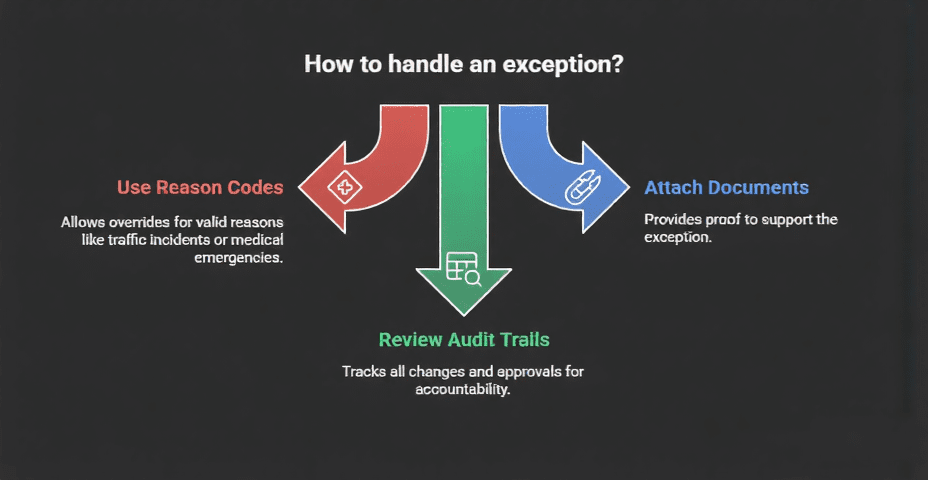
Reporting & Appeals: Employees can view their point history. Managers can approve justified exceptions (like medical issues, weather, or system outages) with a full audit trail.
Result: a fair, auditable system that turns attendance from a gray area into a clear process everyone understands.
How NextGen Workforce Helps You Run a Better Point System
NextGen Workforce is designed to make policy-driven attendance simple. You set the rules, and we handle the rest.
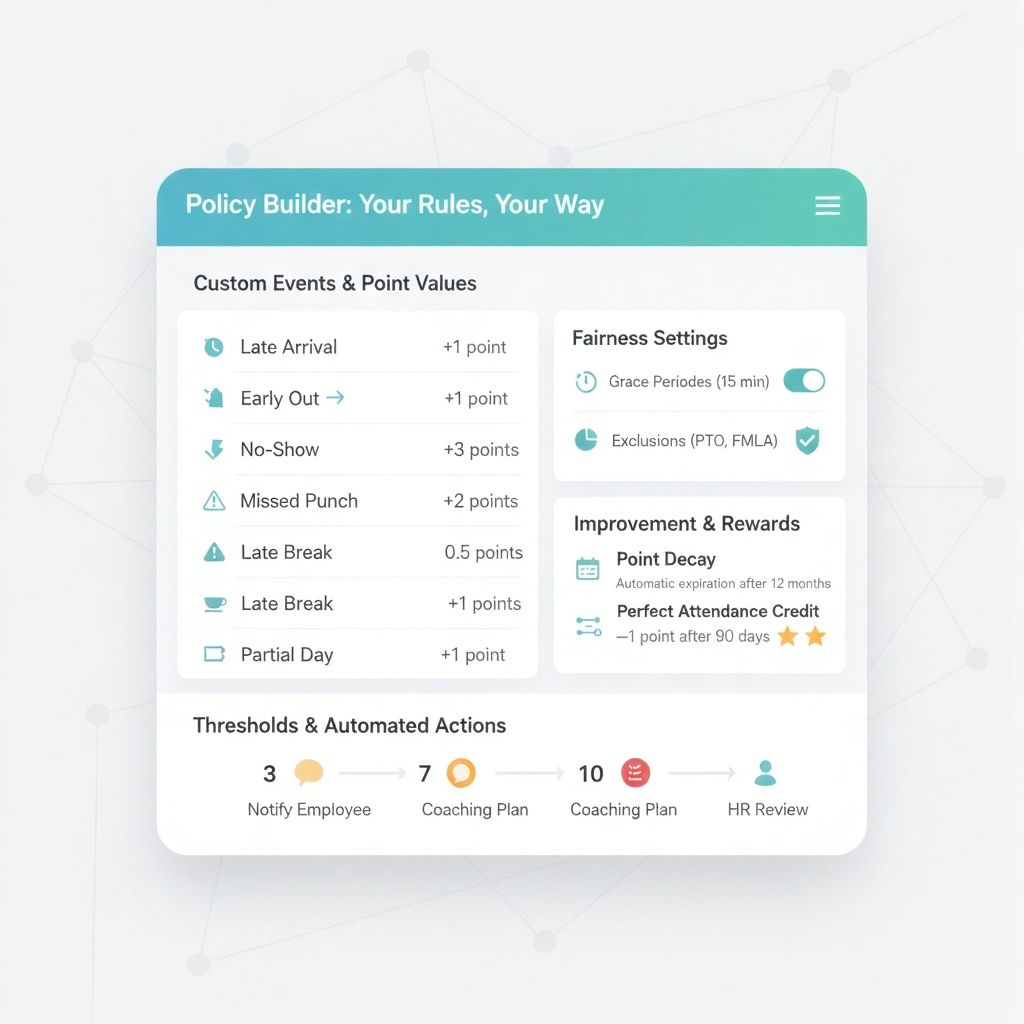
Policy Builder (Your Rules, Your Way)
Custom events → point values (late, early out, no-show, missed punch, late break, partial day, etc.)
Grace periods and rounding to prevent unfair minor penalties
Exclusions for protected or approved absences (PTO, certified sick leave, FMLA/local equivalents)
Point decay (automatic expiration after X months) and perfect attendance credits
What to Consider When Creating Your Attendance Point System
A good system balances consistency, legal compliance, and human context. Use this checklist when designing or revising your policy.
Define Events Clearly Clearly outline what counts as late, early out, missed punch, no-call/no-show, partial absence, and late break. Include grace periods, like up to 5 minutes late = 0 points, to avoid minor penalties.
Set Fair Point Values Assign reasonable penalties: a no-call/no-show should be more serious than a late return from break. Use your data—identify which events have a real operational impact—and adjust accordingly.
Use Progressive Thresholds Create thresholds that gradually escalate consequences (like 3 / 7 / 8 points). Link each level to a specific action, such as coaching, written warning, or termination review. Consistency benefits both the employer and employees.
Add Decay and Positive Credits Avoid “permanent punishment.” Allow points to roll off after a defined period (like 12 months), and give perfect attendance credits for consistent improvement. This keeps the policy positive.
Respect Protected Leave & Legal Nuance Do not assign points for approved or protected absences (PTO, certified sick leave, parental leave, jury duty, etc.). Follow local labor laws and any union agreements. Build exceptions into the system, not through one-off manager decisions.
Align with Scheduling & Real Operations If your workplace often has last-minute changes, ensure shift swaps and open shifts are easy to manage. Approved changes should not incur points. The intent is coverage and fairness, not punishment.
Keep It Transparent Share the policy in your handbook and show employees their current points and next thresholds. Transparency lowers disputes and improves behavior more effectively than penalties alone.
Support Appeals (With Audit Trails) Recognize that life occurs. Provide employees with a simple way to explain unusual circumstances and upload documents. Require managers to approve or deny with reason codes while maintaining a full history for fairness and audit defense.
Train Managers Offer short training and template communications for supervisors on how to review exceptions, provide early coaching, and document correctly. Inconsistent enforcement undermines the entire policy.
Measure & Adjust Review data quarterly: Which events lead to the most points? Are there spikes at certain locations? Do some rules have unintended consequences? Adjust point values, grace periods, or thresholds as necessary.
Example: A Balanced, Real-World Policy (Template)
Grace: Up to 5 minutes late equals 0 points; beyond that:
5–15 minutes late: 0.5 points
More than 15–60 minutes late: 1 point
Early out (more than 10 minutes early, unapproved): 0.5 point Missed punch (not fixed by the end of the pay period): 0.5 points No-call/no-show: 3 points
Decay: Points expire 12 months from the event date. Perfect attendance: Deduct 1 point for 60 consecutive days without incidents.